Key Facts
Client:
Provincial Government of Bizkaia in partnership with Tecnalia Research & Innovation
Scope:
Deployment of Spain's first connected highway corridor and real-world CCAM test environment
Solutions
Connected vehicle ecosystem including roadside units (RSUs), onboard units (OBUs), a Connected Mobility Control Center (CMCC), C-ITS services, vehicle-to-infrastructure communication, and Port of Bilbao integration
Kapsch TrafficCom was selected to deliver the connected vehicle technology powering the Bizkaia Connected Corridor, Spain's first real-world test environment for Cooperative, Connected and Automated Mobility (CCAM). The project serves as a living laboratory where vehicles, roadside infrastructure and traffic management systems communicate in real time to improve safety, efficiency and traffic operations.
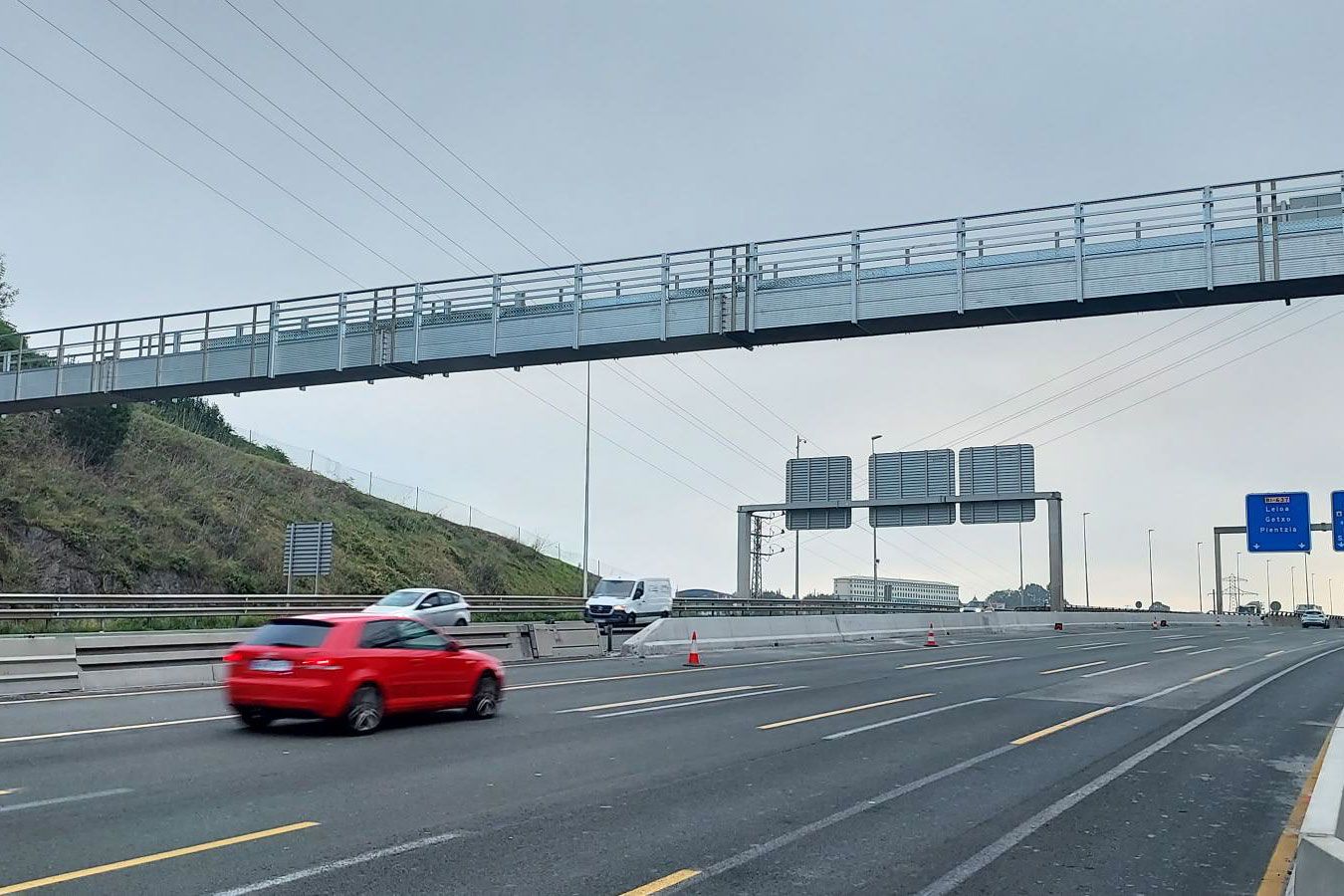
The corridor spans approximately 57 km on the AP-8 motorway between Ermua and Ugaldebieta, creating an intelligent transport environment where road operators and connected vehicles exchange critical traffic and safety information in real time.
The Challenges
As connected mobility technologies mature, road operators require real-world environments to validate Cooperative ITS (C-ITS) services, communications standards and automated mobility applications before large-scale deployment.
The Province of Bizkaia aimed to:
- Establish Spain's first operational connected corridor.
- Create a large-scale testing environment for CCAM technologies.
- Enable infrastructure-to-vehicle (I2V) and vehicle-to-infrastructure (V2I) communication.
- Improve road safety through real-time hazard and traffic notifications.
- Extend connected mobility services to freight operators serving the Port of Bilbao.
The Solution
Kapsch delivered an end-to-end connected mobility ecosystem combining roadside equipment, vehicle technology and centralized management capabilities.
Key Components Delivered
- Deployment of Dual Roadside Units (RSUs) along the corridor.
- Deployment of ITS On-Board Units (OBUs) for connected vehicles.
- Implementation of a centralized Connected Mobility Control Center (CMCC).
- Integration of physical and virtual roadside units.
- Extension of C-ITS services to heavy goods vehicle operators connecting to the Port of Bilbao.
- Integration of the "Autoridad Portuaria de Bilbao" mobile application as a virtual roadside unit.
- Five-year hardware and software maintenance support.
The Connected Mobility Control Center collects, processes and distributes real-time information between vehicles, infrastructure and traffic management systems, enabling dynamic traffic management and immediate communication of road events.
Key Achievements
Connected corridor length
57 km of intelligent motorway infrastructure
National milestone
Spain's first connected corridor
Connected mobility platform
Integrated roadside, vehicle and traffic management communications
Port integration
Connected mobility services extended to freight traffic serving the Port of Bilbao
Digital infrastructure
Combination of physical and virtual roadside units
Operational management
Centralized monitoring via Connected Mobility Control Center
The Impact
- Improved Safety
Drivers receive real-time notifications about hazardous road conditions, traffic disruptions and congestion, allowing earlier reactions and reducing the risk of incidents. - More Efficient Traffic Operations
The Connected Mobility Control Center enables continuous traffic monitoring and more informed traffic management decisions through direct data exchange between infrastructure and connected vehicles. - Foundation for Automated Mobility
The corridor provides a real-world testing environment for future CCAM applications, accelerating the introduction of connected and automated transportation services in Spain. - Scalable Digital Infrastructure
The integration of roadside units, virtual roadside infrastructure, and mobile applications demonstrates a scalable model for future connected highway deployments across Europe.