
Client:
Maryland Transportation Authority (MDTA)
Duration:
February 2018 to Present
Solution:
Statewide AET conversion
The Challenge: Modernizing Maryland’s Critical Arteries / Complexity, Legacy Barriers, and Environmental Sensitivity
The Maryland Transportation Authority (MDTA) manages a diverse network ranging from the Fort McHenry Tunnel to the suburban Intercounty Connector (ICC). In 2018, MDTA initiated a comprehensive "Third Generation" tolling project that involved consolidating "six or eight projects rolled into one," requiring the management of a complex mix of greenfield (new construction) and brownfield (retrofit) sites.
Legacy and Environmental Pain Points
- Vendor Lock-in: The incumbent back-office vendors provided insufficient documentation, creating a risk of data loss during the transition.
- Environmental Constraints: The system had to function consistently and optimally in an environment high in air particulates, and meet strict light pollution standards in the suburban neighborhoods surrounding the ICC, where residents were sensitive to night-time strobe flashes.
- System Fragility: The previous system relied on a "rebuild from backup" disaster recovery model, which posed a risk of significant downtime.
The challenge intensified with the onset of COVID-19. To protect public health, MDTA mandated an accelerated conversion of all mixed-mode (cash) lanes to All-Electronic Tolling (AET).
Kapsch was tasked with executing this massive roadside overhaul and software implementation while maintaining uninterrupted traffic flow on heavy commuter routes like the I-95 Express Lanes and Intercounty Connector (ICC).
244,405,029
Transactions Processed Annually (2024)
107
Lanes Converted / Deployed
~99.8%
Image Accuracy
0
Zero Safety Incidents during rapid deployment
The Solution
“Active-Active” Redundancy, Trip-Building, and Radical Transparency
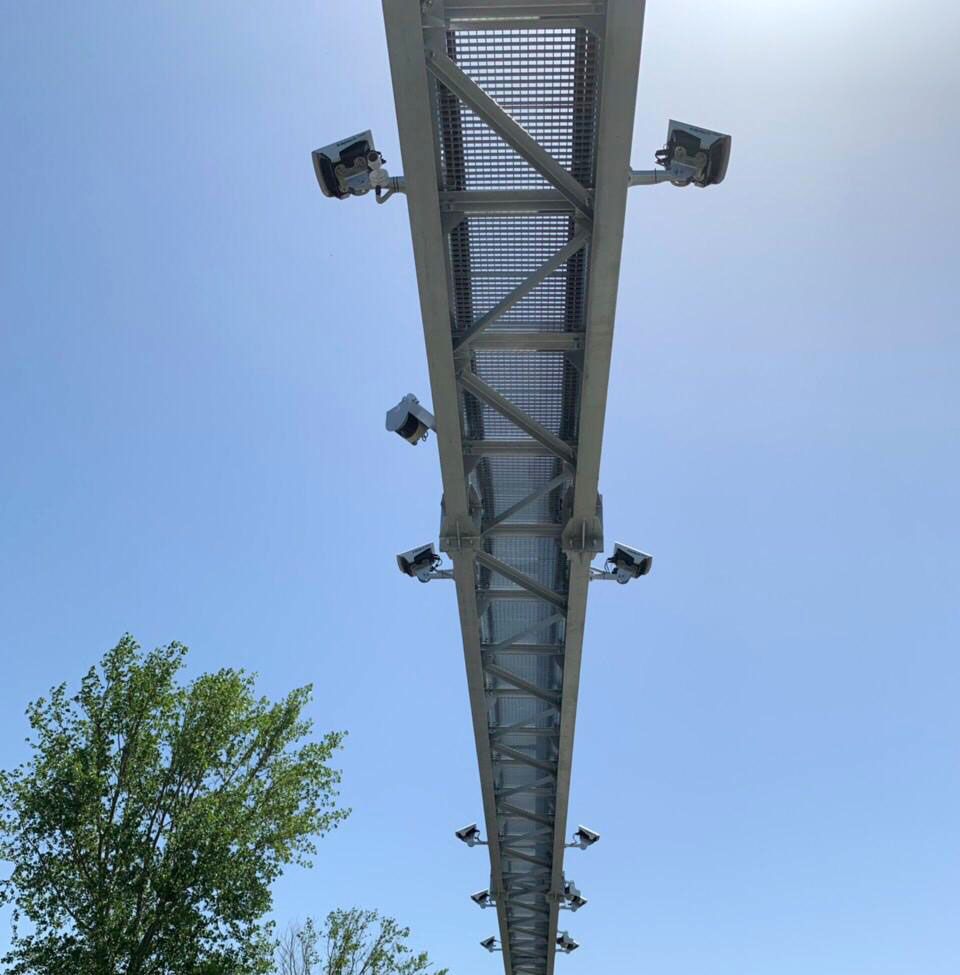
Kapsch delivered a solution that prioritized reliability and collaboration, executing the conversion of 65 existing AET lanes and 81 plaza lanes (146 total active lanes) across the state. The solution utilized a standard gantry design and stereoscopic nVDC sensors to minimize civil construction impact. To overcome the lack of legacy documentation, Kapsch engineers emulated the legacy interface, creating a "translator" that allowed the new roadside equipment to feed data seamlessly into the old back-office system until the new one was ready.
Crisis Response
During the peak of the pandemic (March - May 2020), Kapsch transitioned all of the MDTA lanes from legacy equipment to Kapsch equipment and installed the new plaza / host equipment which ran in parallel with the legacy system. The AET zones were installations/ upgrades were primarily executed during multiple shifts over weekends, the teams achieved zero infections and zero safety incidents, successfully delivering the AET conversion ahead of schedule.
Technological Innovations
Synchronized Active-Active Host Systems: Unlike the previous system, Kapsch installed a fully redundant "Hot Standby" host. Both the primary and secondary systems receive live transaction data simultaneously, ensuring no data loss and capability to transition in minimal time between the systems.
Environmental Tuning: Kapsch utilized white-light VRX cameras and custom-tuned the flash intensity on the ICC gantries to eliminate light pollution complaints while maintaining high-quality image capture.
Trip Building Logic: A robust software feature that groups individual transactions from multiple toll points into sets of continuous trips. This produces a single, accurate billable event for a vehicle’s entire journey.
Stereoscopic nVDC: Deployed in AET lanes for high-accuracy vehicle classification (height, width, axle count) without requiring in-ground treadles in new zones.
Data Democratization (Prev. Client Collaboration): Kapsch established a data warehouse that mirrors data at the Host level across four systems for security. Uniquely, Kapsch provides the back-office vendor with direct access to transaction audit data, enabling their customer service teams to validate images and resolve driver disputes faster.
The "Trip Building" Logic
The system utilizes Trip Building logic to group individual vehicle transactions at different toll points into trips. This logic creates a "fully formed transaction" at the roadside—bundling image and sensor data before it ever hits the back office—reducing processing errors.
Measurable Impact
Operational Excellence and Safety
As of 2024, the Kapsch system successfully processes over 244.4 million transactions annually, serving as the financial backbone for Maryland’s transport infrastructure. The project received final System Acceptance in March 2023 and is currently in the Operations and Maintenance (O&M) phase through February 2028.
Operational Resilience & Crisis Response
Beyond standard maintenance, Kapsch has functioned as a direct extension of the MDTA team during critical infrastructure emergencies:
Emergency Gantry Restoration (2021): Following a major fire that destroyed two operational gantries, Kapsch immediately mobilized to deploy a temporary tolling solution. By adjusting the statewide installation schedule in real-time, the team rebuilt the permanent infrastructure and restored revenue collection without delaying the broader AET conversion project.
Francis Scott Key Bridge Crisis (2024): In the immediate aftermath of the bridge collapse, Kapsch leaped into action to support Maryland’s emergency operations. The team coordinated with the Coast Guard and safety officials to decommission impacted sites and ensure that emergency response vehicles could move through turnaround zones without being billed. Kapsch remains an active partner in the engineering and planning phases for the bridge's replacement.
Revenue Acceleration
By running multiple installation shifts in parallel, Kapsch accelerated the AET conversion, allowing MDTA to realize revenue from the new zones months earlier than planned.
Future Expansion
Kapsch recently completed upgrades to the Baltimore Harbor Tunnel (converting 16 plaza lanes to 4 AET zones), and will be deploying 3 new AET zones on the I-95 Express Lanes scheduled for 2027.
Environmental Benefit
The removal of toll plazas has eliminated stop-and-go traffic, significantly improving air quality and reducing congestion on the Bay Bridge and Hatem Bridge corridors.
During the COVID-19 emergency, all-electronic tolling has been an operational success and has helped us protect our toll collection employees and the traveling public. With this system now permanent, stopping to pay tolls in Maryland is a part of history.
Jim Ports, Executive Director at Maryland Transportation Authority (MDTA)

Frequently Asked Questions
How did Kapsch handle the environmental challenges in tunnels and suburbs?
Kapsch increased preventive maintenance cycles to handle smoke/soot in the Fort McHenry Tunnel and custom-tuned the strobe lighting on the ICC to prevent light pollution in residential areas.
What is "Active-Active" redundancy?
It is a refined system architecture where two separate but synchronized host systems receive transaction information and images from all the MDTA tolling lanes simultaneously. If one host system fails, the other takes over without the need to "rebuild" from backups, drastically reducing downtime risks. This differs from the industry’s typical system architecture where some data is inevitably lost when the switch is made from the primary host system to the secondary.
How did Kapsch integrate with the legacy back-office vendors?
Kapsch developed a custom emulation layer to translate new data formats for the legacy system and provided the incoming vendor with direct access to image data to streamline customer service operations.


